

Are All Trends Fake?
Can We Still Tell What's Actually Popular?

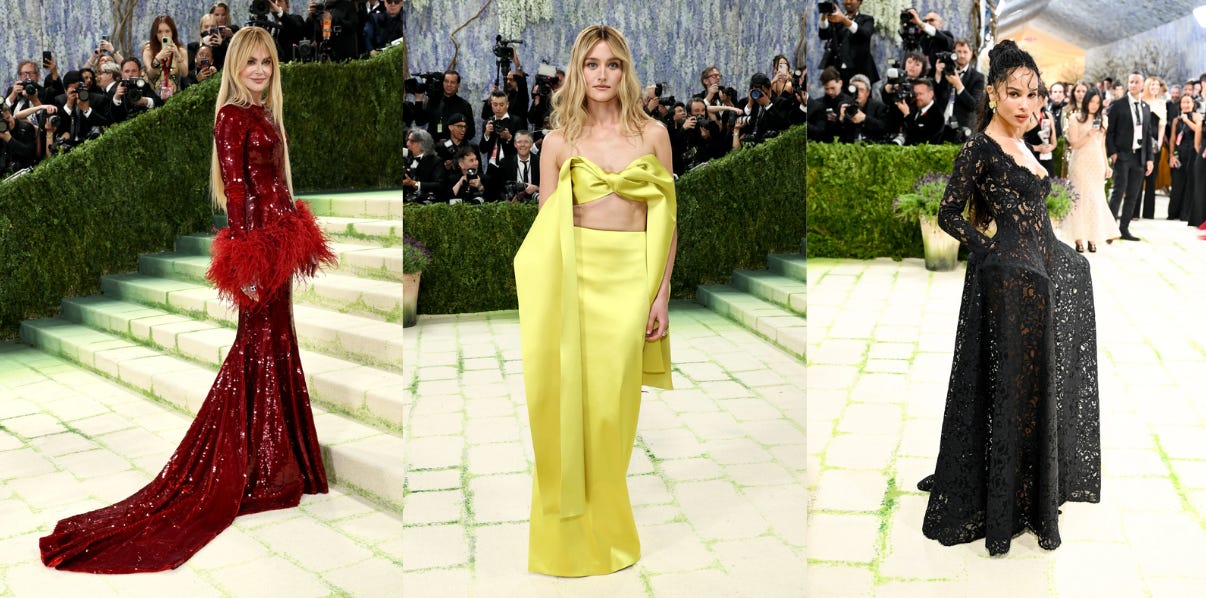
The Feed Is Fake
It's the title of the Vulture article that has not left my mind all week and a sentence that now creeps into my head every time I open Instagram.
“Joe Lim estimates that 90 percent of what you see on the internet is advertising in disguise, and he should know.” writes Lane Brown in a piece that probably shouldn't have surprised me as much as it did.
The article explores a practice being used by the music called clipping, where agencies pay networks of users to manufacture virality around songs, artists and cultural moments by flooding social platforms with content designed to feel organic.
It’s not advertising.
Not sponsored posts.
Not influencer campaigns.
It’s something much murkier.
Trend simulation.
Only it’s not just the music industry. One of the campaigns discussed in the article involved the Met Gala. And perhaps naively, I finished reading with my mind slightly blown.
It’s not because brands (or rather publications) are manufacturing attention. Fashion houses, magazines and advertisers have been doing that for decades. Advertising is essentially what modern capitalism is built on.
As it has evolved, and moved through technology, what feels different now is how difficult it has become to spot.
Just as influencer marketing regulation has caught up with our technology, what unsettled me was something else.
For most of the internet’s existence, we’ve treated attention as evidence that people cared or that something resonated. Evidence that a Chanel show was genuinely being discussed because people found it sticky, buzzy, or interesting enough to share with their friends. Fashion has always relied not only on advertising but on social proof.
But if virality can be manufactured, can we no longer tell the difference?
But first, every week I recommend three outfits, for work, for brunch and for attending a wedding. Here are this week’s three outfits.
Three Outfits
This week’s three outfits are centred around lace, a fabric I’ve been working with quite a bit this year and one I keep finding myself drawn back to. I adore the way lace can communicate femininity in a way no other fabric quite can.
It’s inherently delicate and has an emotional quality to it that can change the vibe of an outfit instantly.
Depending on how it's styled it can feel sexy, romantic, vulnerable, playful or slightly undone. It takes on a different form in every look this week.
Each look this week explores a different side of that spectrum and captures a different mood. Hopefully one resonates with you this Sunday and inspires you into the week ahead.
A quick note before we dive in. I discuss a couple of the brands in the deep dive today, so I wanted to add that all links are shared through ShopMy, not just for affiliate kickbacks, but because it helps me understand what pieces and brands are resonating most with this community.
Many of the brands featured don't offer affiliate commissions at all, and whilst there's nothing wrong with including those that do, I'm very intentional about not letting that influence what appears in this section. These are the pieces I’m wearing, buying, saving and loving.
Work Outfit
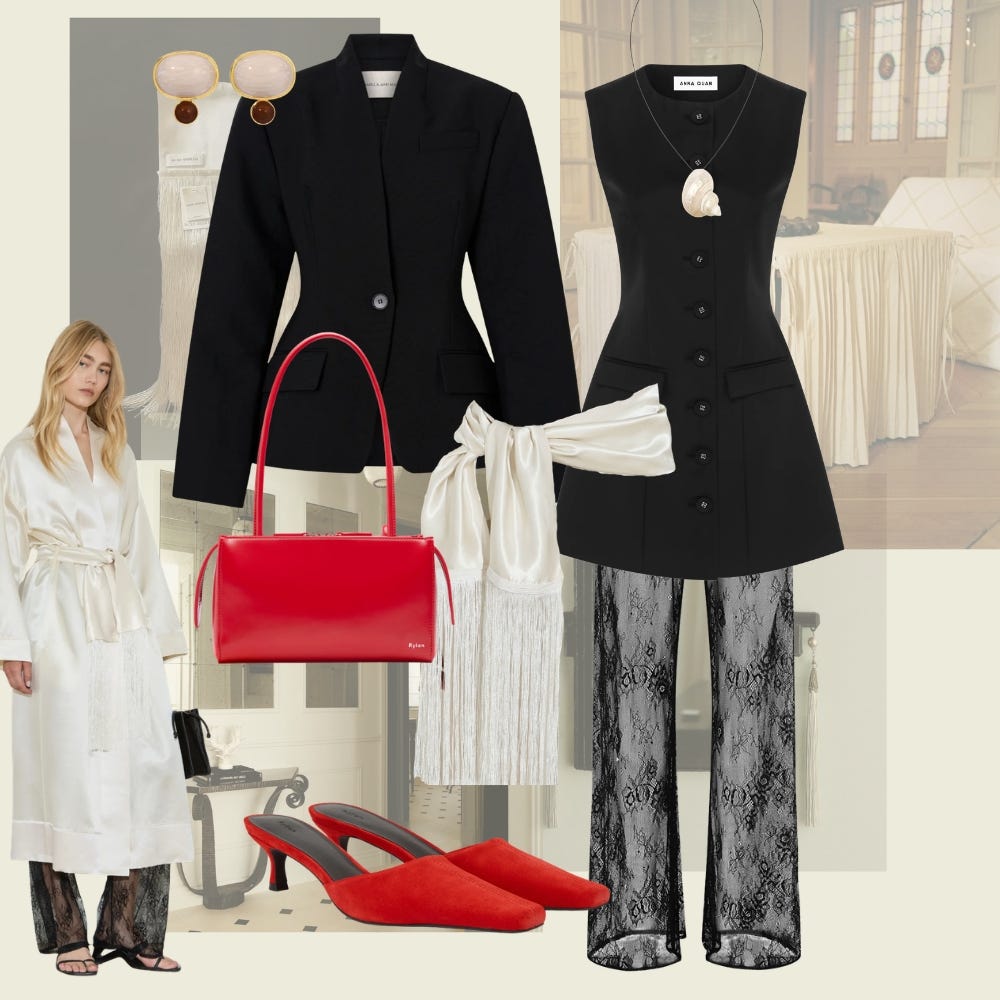
The shell necklace in this structured, tailored corporate outfit really does it for me. It feels completely out of place. Which for me, is often a sign that it’s exactly right.
If you haven’t come across Maison Essentiele before, it’s a beautiful small Australian brand that specialises in what I would call the art of delicateness. Slips, silks, and lace.
Brunch Outfit
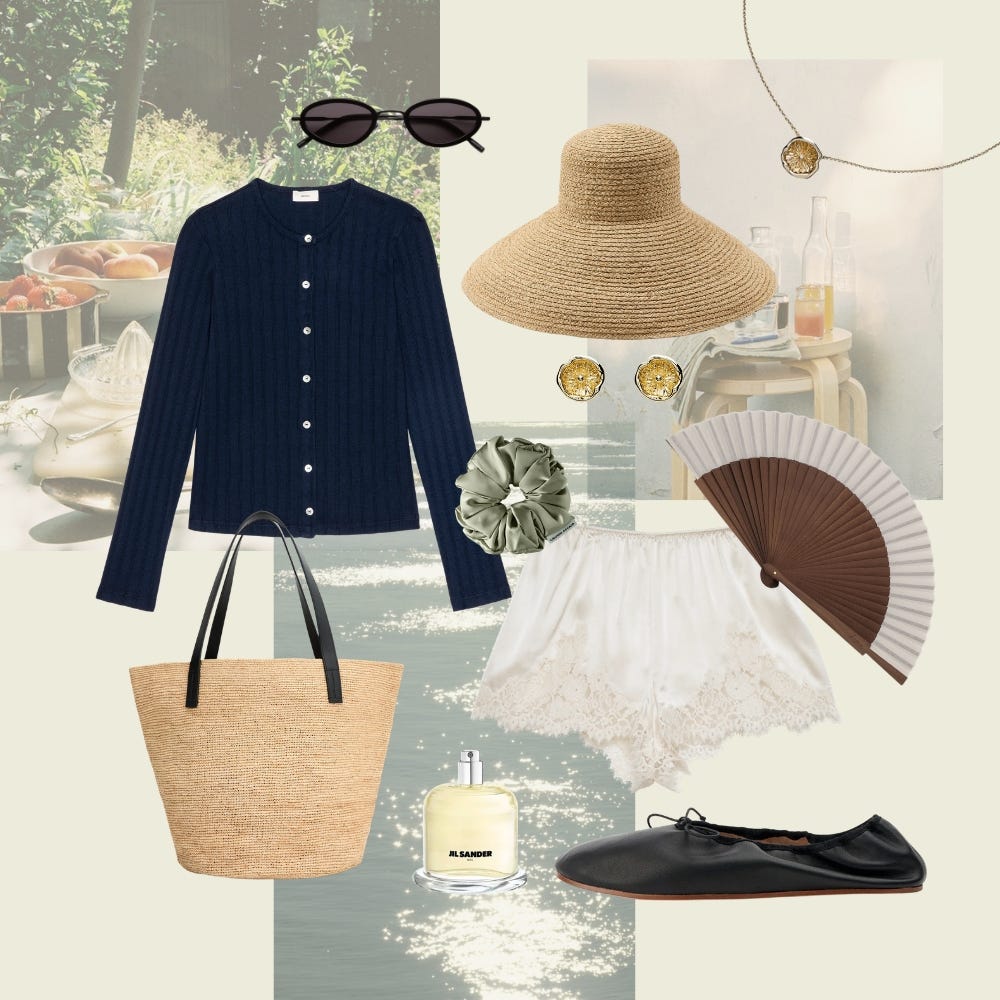
Everything about this look is a vibe. I can smell the Jil Sander perfume mixed with a salty sea breeze from my cold, rainy Aussie couch. The Zara hat and Scanlan Theodore poppy earrings are my must-haves (and my do-haves).
Wedding Outfit
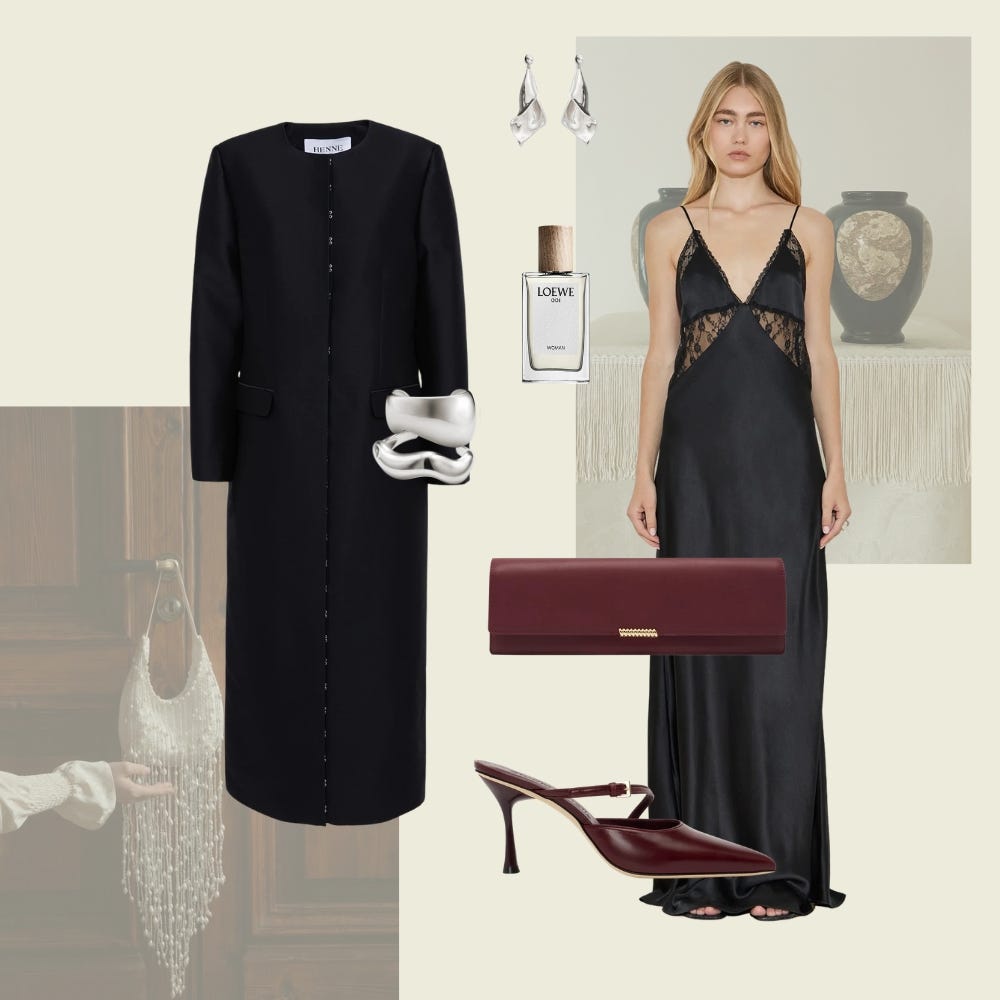
Ugh, once again it’s the jewellery and the perfume for me. I don’t particularly love floral prints, but apparently I’m a sucker for floral jewellery. Those Agmes earrings are divine.
Are All Trends Fake?
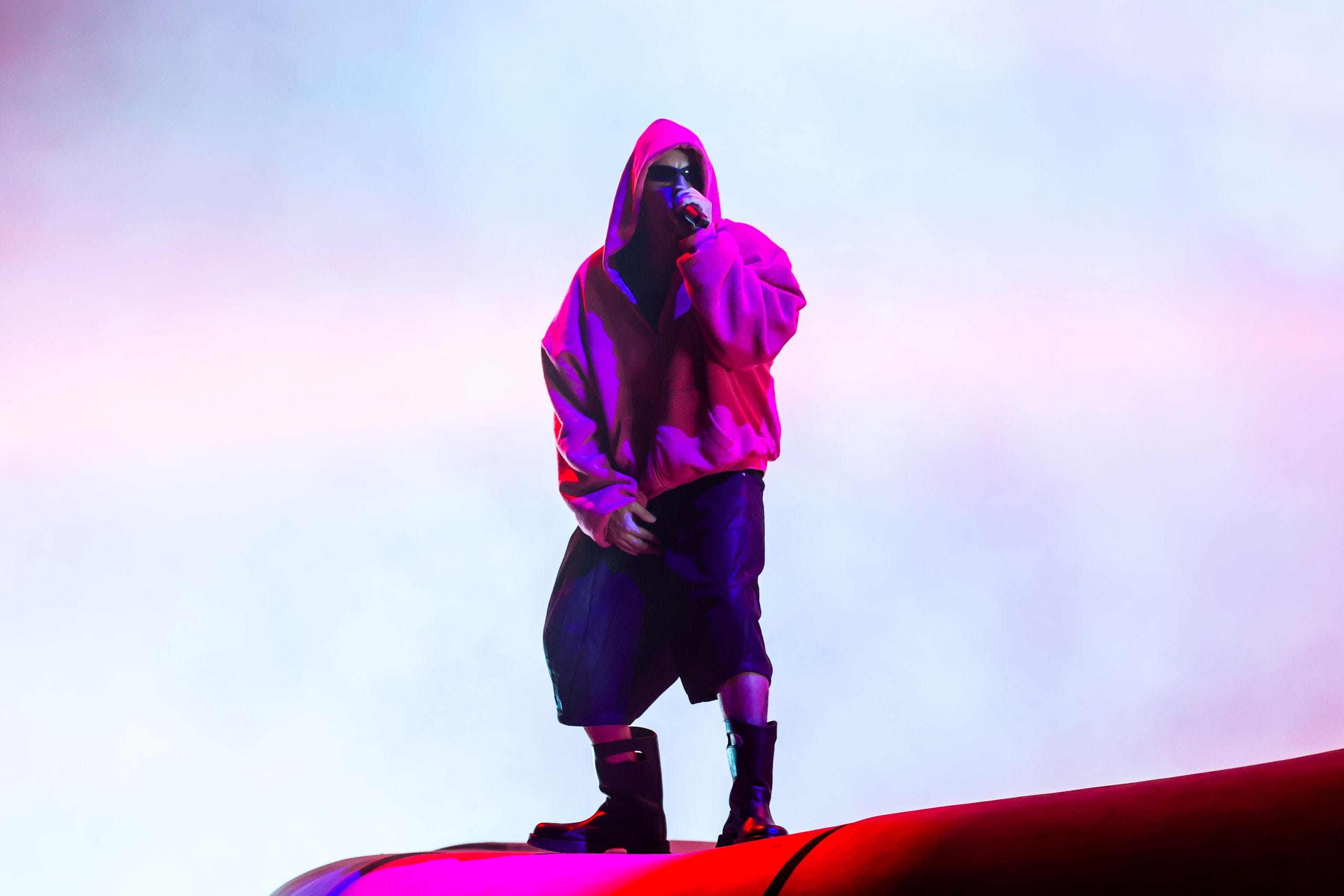
One of the examples of clipper campaigns discussed in Lane Brown’s article was Justin Bieber's now-viral Coachella performance. The clips included him on stage casually searching for old videos of himself on YouTube, the platform where he was first discovered, and then performing alongside them. The audience was treated to a now-father Bieber sharing a stage with baby-faced kid Bieber.
I mean, it reeks of organic virality… doesn’t it?
And yet this was one of the paid campaigns. (This headline now feels slightly ironic).
What does this have to do with fashion, I hear you ask?
When a cultural moment gains enough momentum, it rarely stays confined to the original event.
Culture spills.
A celebrity becomes a moment, the moment becomes a clip, the clip includes a wife, the wife becomes a trend, a trend becomes a product category.
(Not always in that order).
You can see the same thing happen in fashion constantly. Kendrick Lamar wears flared jeans during the Super Bowl halftime show and suddenly an entire subculture of the fashion world begins debating flared silhouettes again.
Whether that particular moment was organic or not is kind of beside the point. The point is that cultural moments have consequences and they shape what people buy, wear, copy and aspire towards.
That’s where clipping starts to feel especially interesting when applied to fashion.
The article doesn’t accuse fashion brands of running these campaigns but it did make me wonder…if Vogue is commissioning campaigns around something like the Met Gala, how much of the attention surrounding these moments (Vogue World for example? fashion week shows?) is organic and how much is manufactured?
Not fake exactly, but amplified.
The power of social proof isn’t that it convinces you something is fabulous, it’s that it convinces you everyone else is paying attention.
You see enough clips discussing a red carpet look and suddenly it feels like the only thing anybody is talking about. Then you send it to a friend or share it in a group chat, they share it with someone else, somebody makes a TikTok about it.
Somebody writes a newsletter.
Attention creates attention.
Before long you’ve arrived at a genuinely viral cultural moment, even if the initial spark was carefully engineered.
And honestly, it was already difficult enough to identify what was becoming popular organically!
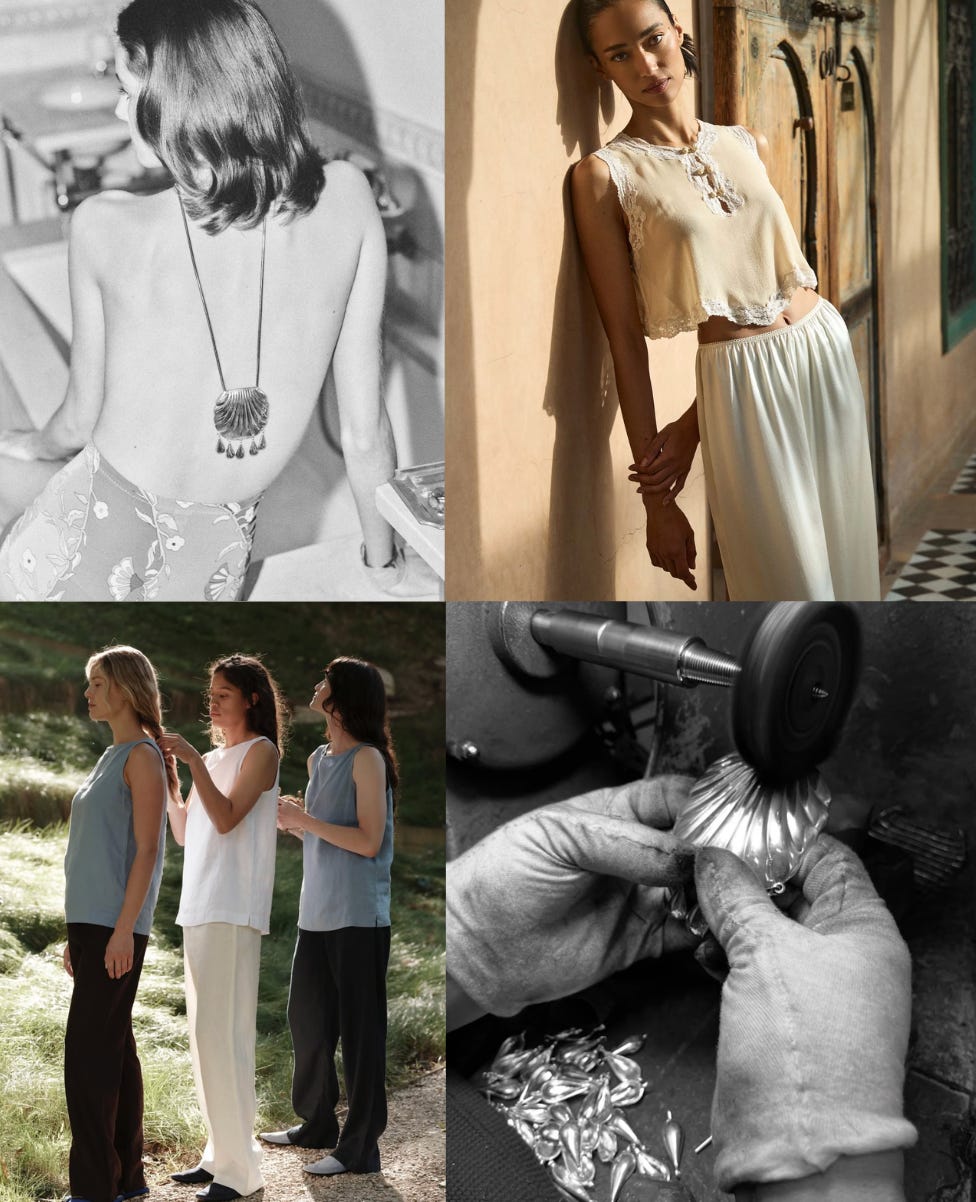
Brands linked in this newsletter like Dôen, Donni, or another well known brand, Juju Vera have become absolute darlings of the fashion world and frequent fixtures in many newsletters (including this one). I genuinely love their products, and the way these brands visually communicate.
The first time I encountered the Juju Vera Petra shell necklace I immediately understood the appeal. It didn’t need much explaining, it’s beautiful.
But would I have encountered it at all if every fashion writer, influencer, Substack author and affiliate platform hadn’t shown it to me first?
Was the necklace genuinely that compelling?
Or did I discover it because, through clever marketing campaigns, I was exposed to it enough times that it acquired the weight of social proof?
Maybe it doesn’t matter? Perhaps it’s a distinction without a difference.
After all, if the product wasn’t good, the attention probably wouldn’t stick. Plenty of heavily marketed products disappear into obscurity every year (there were musicians and Netflix shows I hadn’t heard of in the list of campaigns Brown listed). The brands that survive and thrive still need great design, great timing and a product people genuinely want.
That brings me to the other Joe Lim quote that stayed with me.
“Everybody is doing this now. And if you’re not, you’re behind.”
I mean….if that’s true, then perhaps the landscape has simply changed. Every brand is competing within the same attention economy, with the same tools available to them, playing by the same rules.
Still.
It’s a slightly grim thought that so much of what we experience as culture may increasingly be the result of manufactured momentum rather than collective fascination (remember organic buzz??).
Which is perhaps why moments like the Coldplay cheating scandal feel so oddly comforting. For a few days the entire internet seemed united around something genuinely spontaneous. Millions of people laughing at the same thing at the same time.
Unless that was fake too.
See you next Sunday.
xx
I don't think you have to be an investigative reporter to be able to spot a potentially fake trend, you just have to be immersed in that genre. Because I am Older, I have no opinion on the Beiber Coachella. But because I subscribe to multiple Substacks (free and paid) when that Juju Vera pendant began showing up in multiple newsletters in the same month or so? Either the writers were given it for free, or they were paid large affiliate commission fees, imo. Same with those High Sport pants. I haven't seen any of the same newsletters writing about what's new from those vendors. If they all organically liked what the brands were offering, they would be telling us what's new. Instead, they've moved on. That, to me, is the telling point of a fake trend.
I love the way you write about Fashion.